Green Cedar Lebanon has launched a comprehensive art therapy and child support initiative benefiting nearly 400 displaced children currently residing in shelters and temporary accommodation centers across Beirut.
The initiative was developed in response to the urgent need for psychosocial support and child protection services for children affected by war, displacement, instability, and interrupted education. Many of these children have experienced traumatic events, including forced displacement, the loss of familiar surroundings, and prolonged uncertainty, leaving deep emotional and psychological impacts on their daily lives.
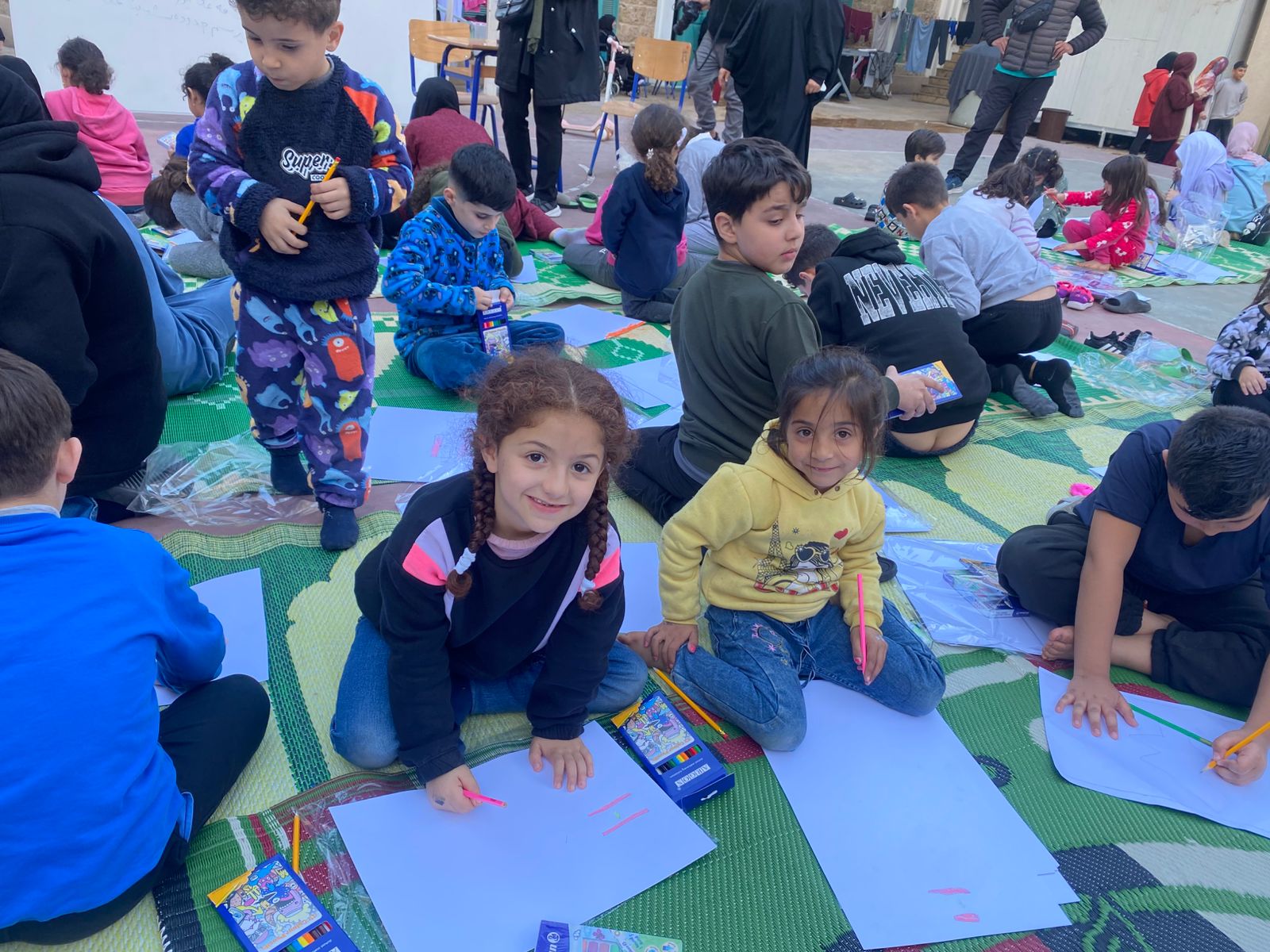
Implemented through weekly workshops and interactive sessions, the initiative creates safe, inclusive, and child-friendly spaces where children can freely express themselves through art, creativity, storytelling, and recreational activities designed to restore emotional wellbeing, resilience, and social connection.
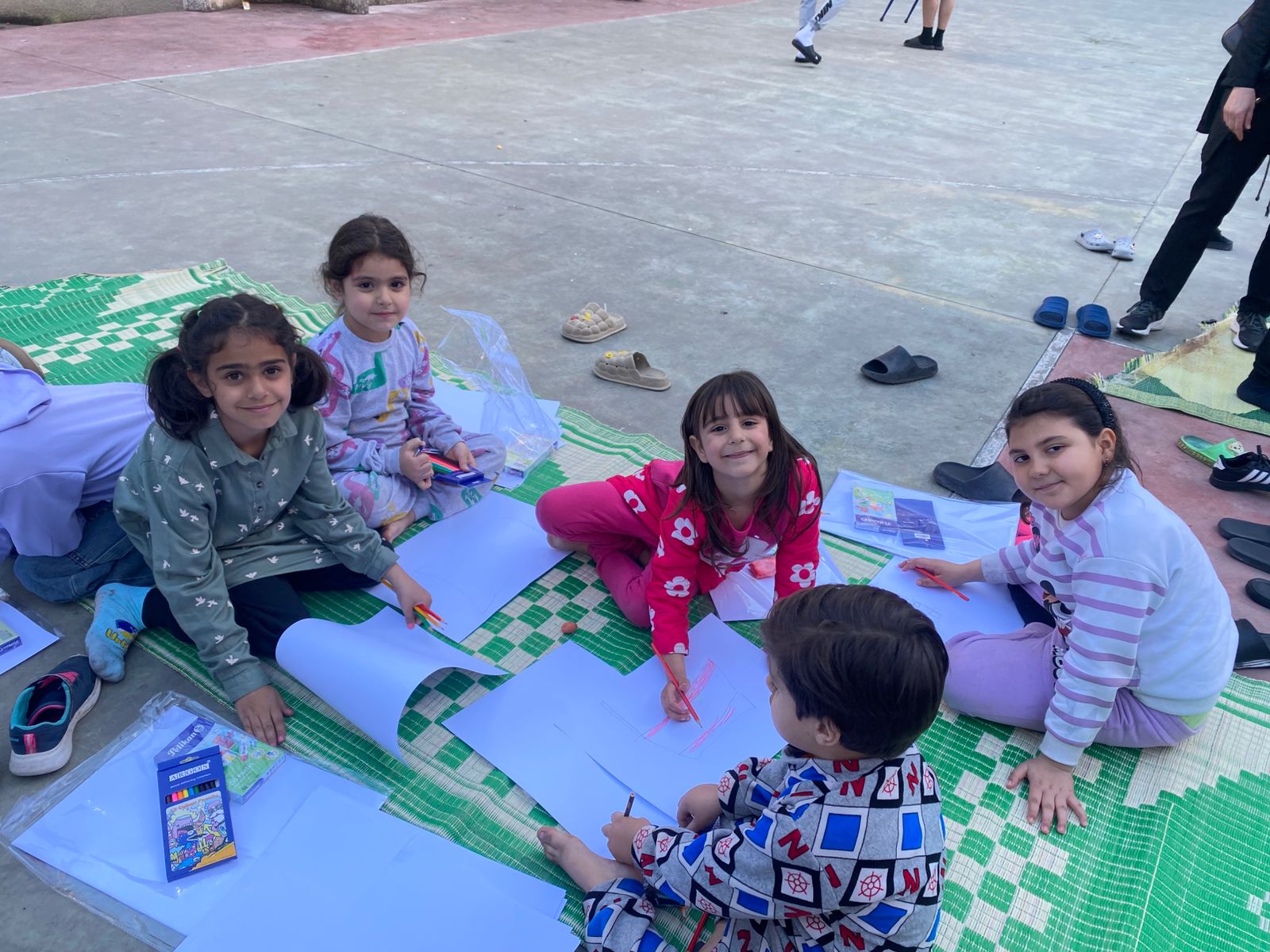
The activity allows children, many of whom have faced war and displacement, to find an outlet for their emotions. Through the provision of art supplies and structured psychosocial activities, the initiative offers children a small yet meaningful sense of stability amid ongoing crisis and uncertainty.
At the heart of the initiative lies a simple but powerful vision: a future where displaced children in Beirut can rediscover safety, hope, dignity, and a renewed sense of belonging.
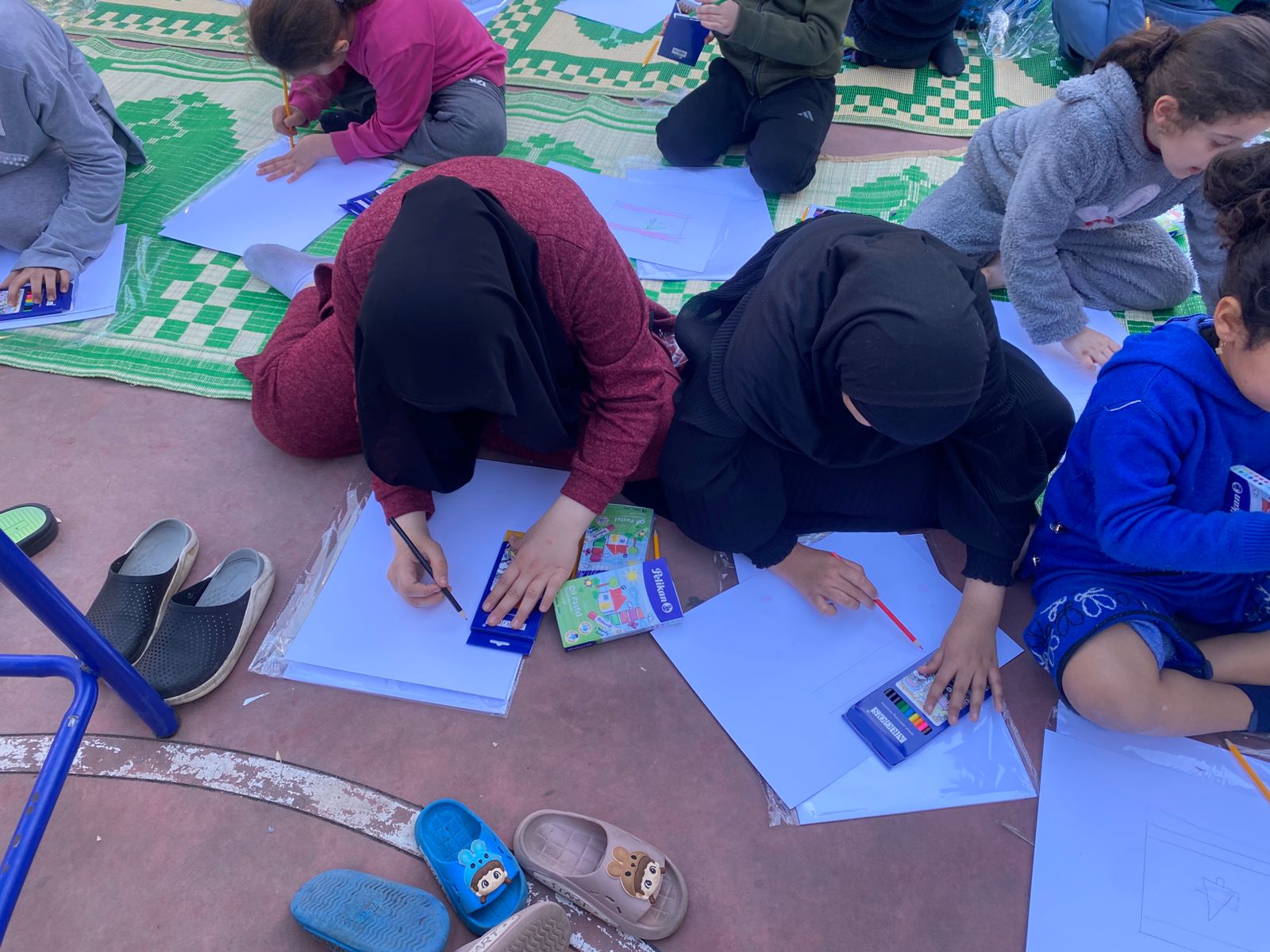
Working directly with children in shelters and educational centers across Beirut, Green Cedar Lebanon adopted a hands-on and compassionate approach to psychosocial support. Facilitators observed that artistic expression quickly became one of the most effective tools for communication and healing, particularly for children struggling to articulate their experiences verbally. Through drawing, painting, and group activities, children gradually regained confidence, reconnected with others, and restored a sense of normalcy despite difficult humanitarian circumstances.
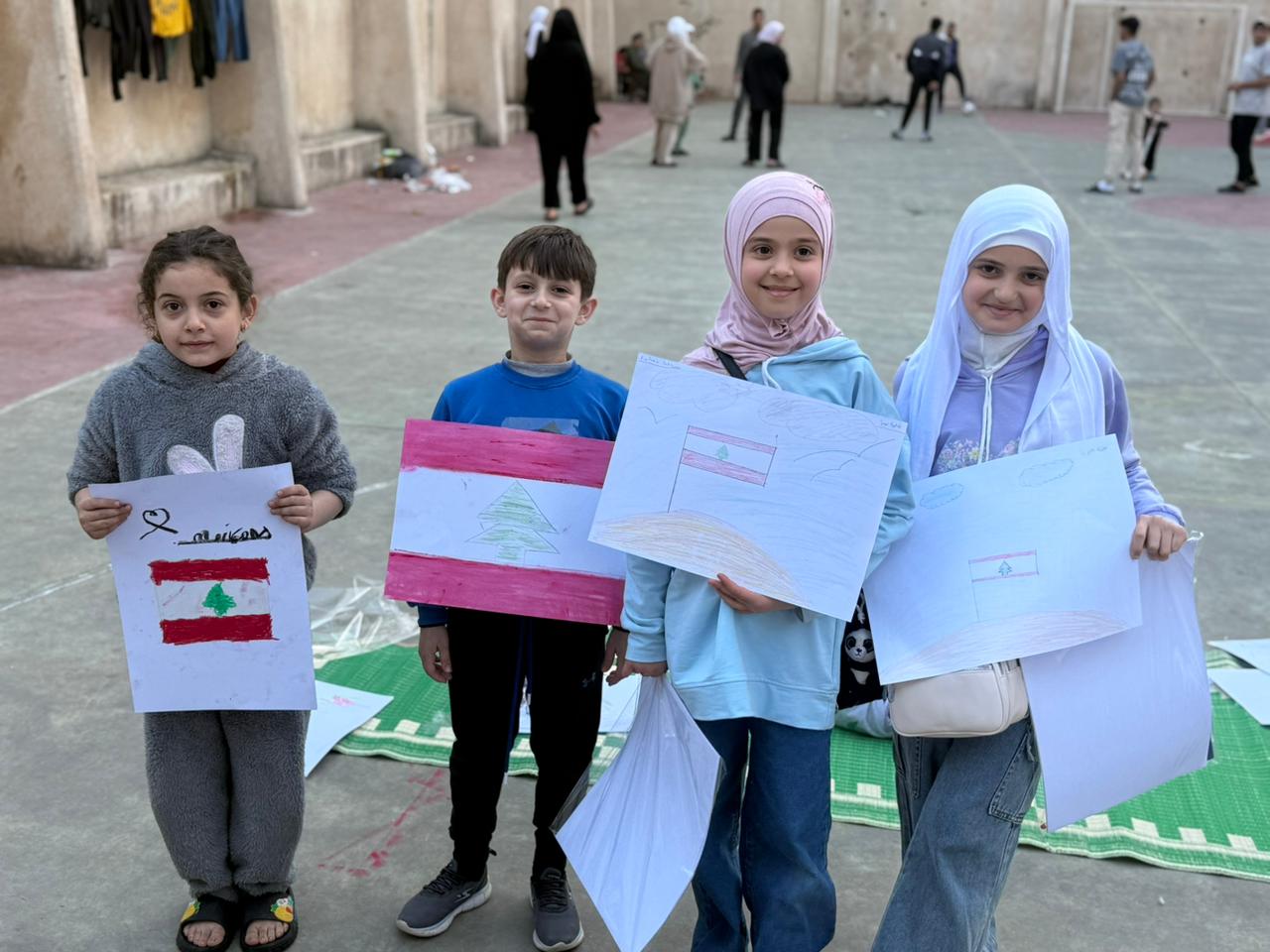
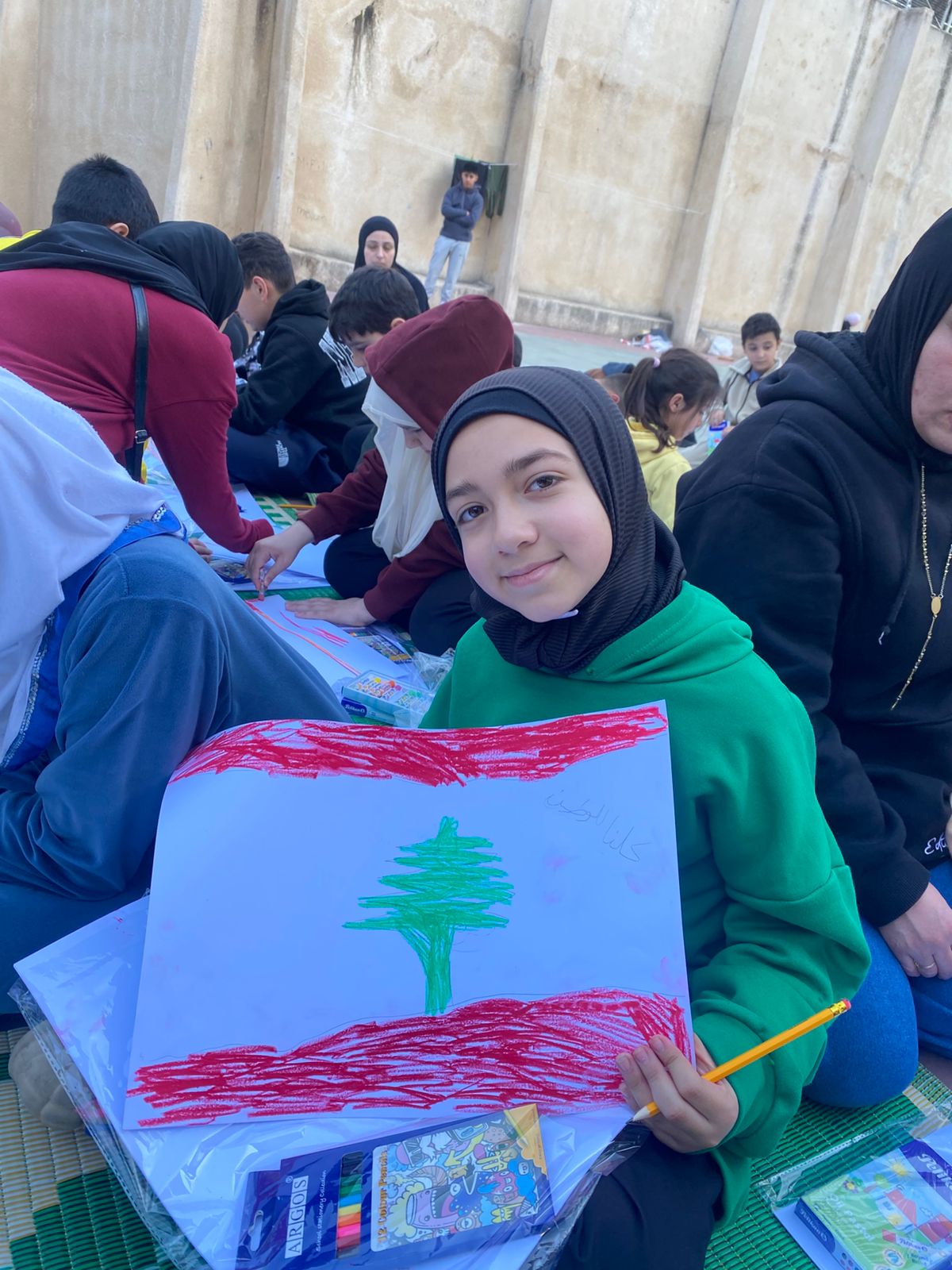
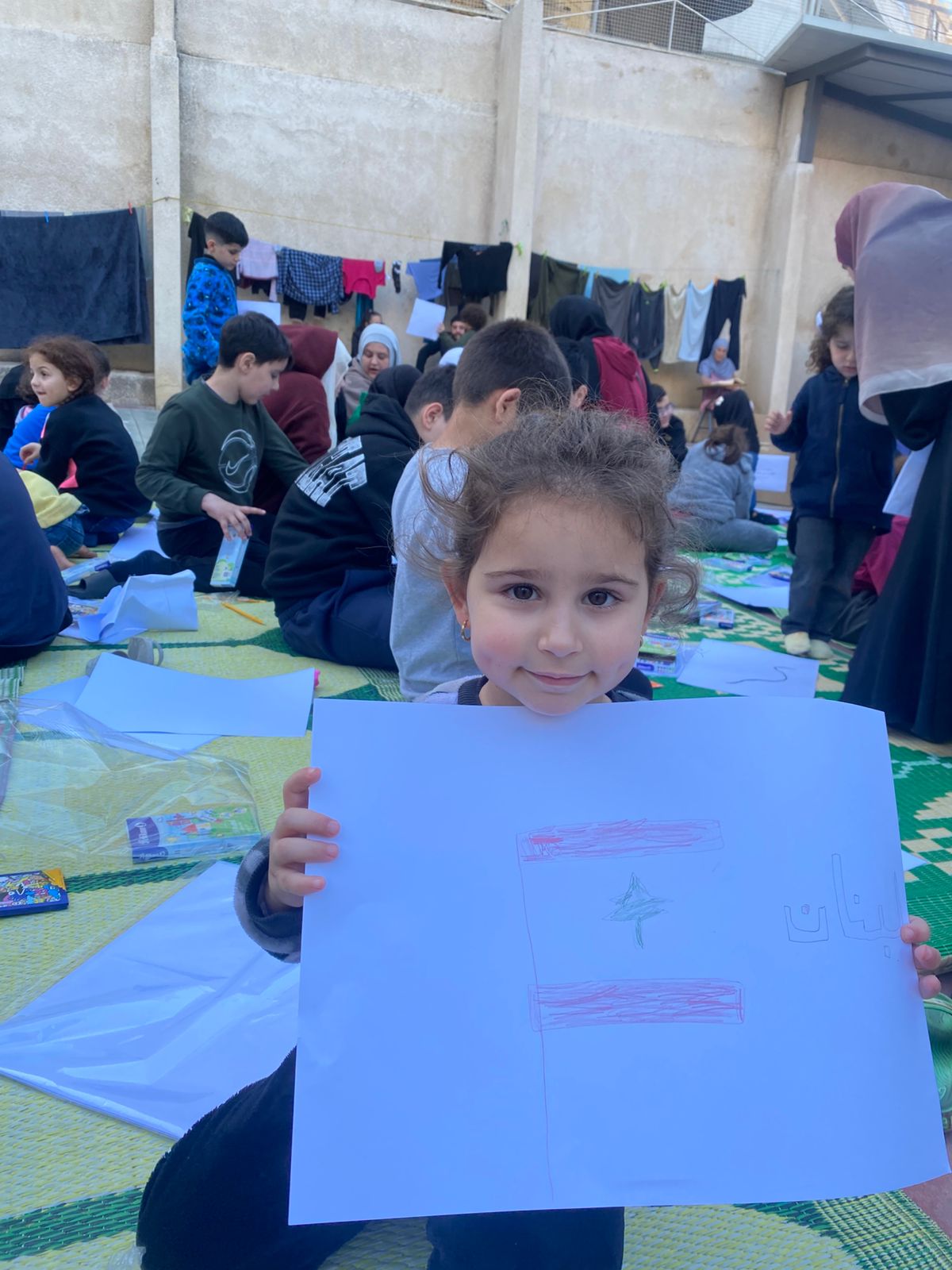
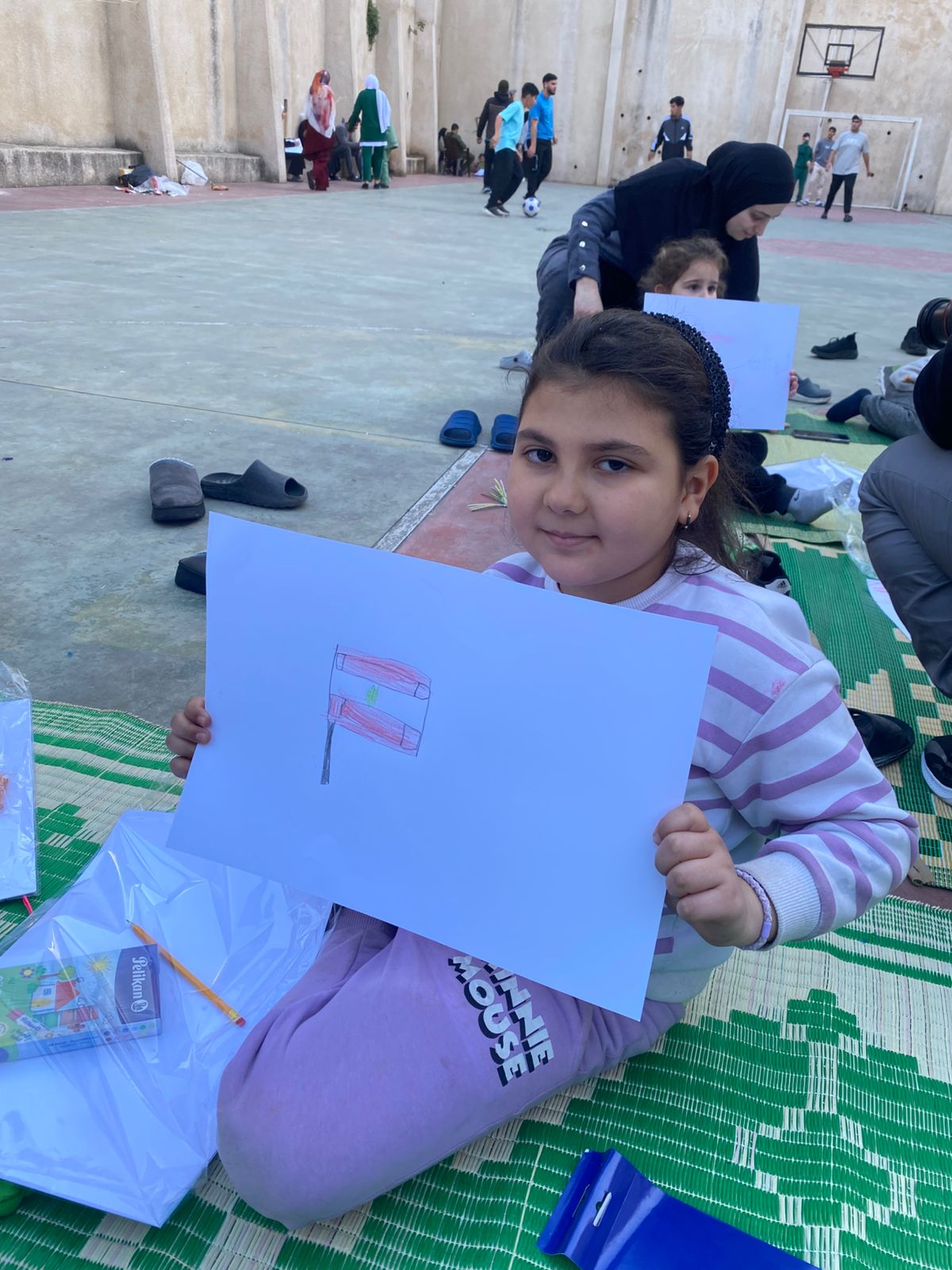
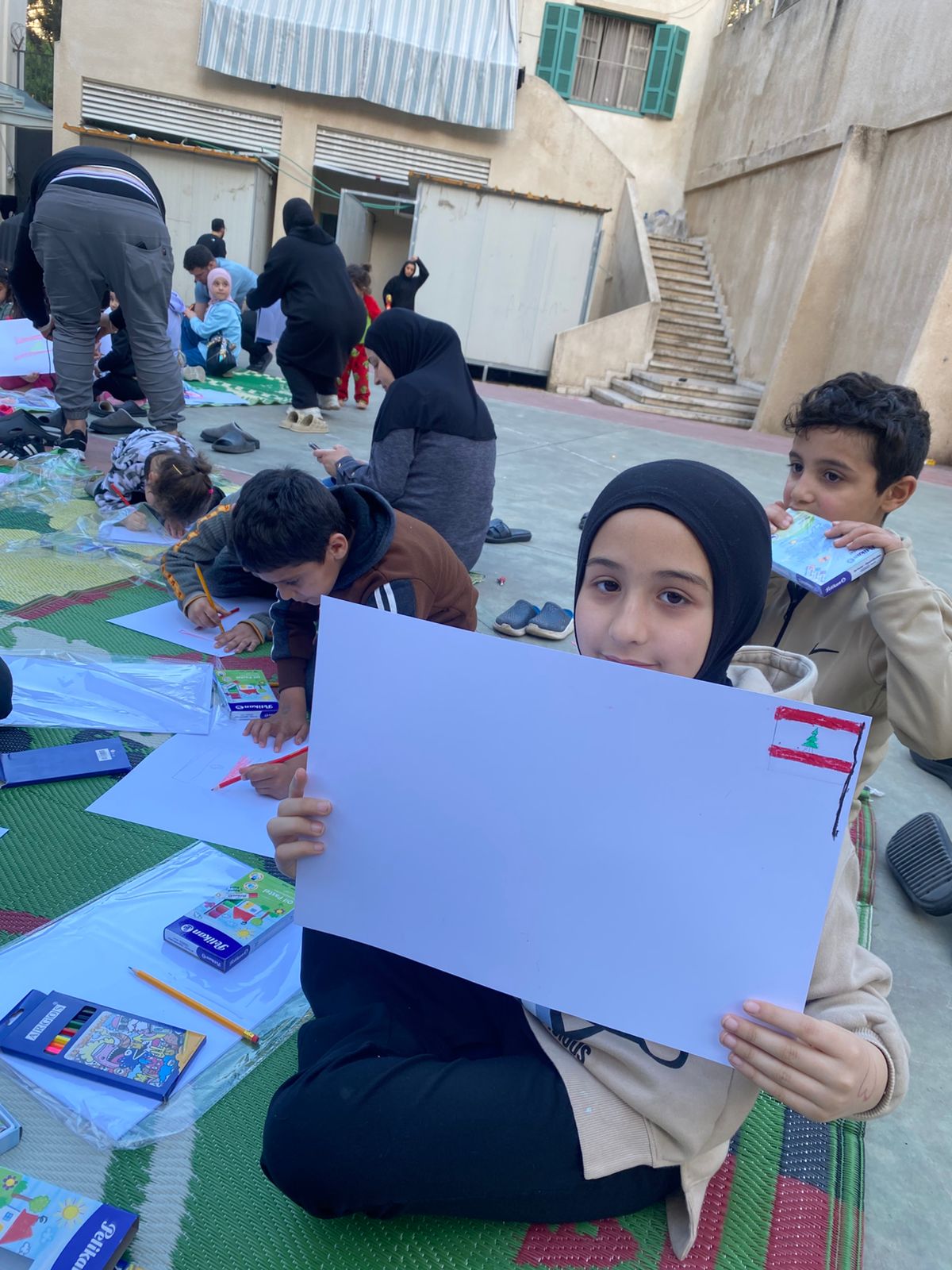
During the workshops, a remarkable and spontaneous pattern emerged. The overwhelming majority of participating children chose to draw the Lebanese flag, repeatedly using the red and white colors alongside the cedar tree symbol across hundreds of drawings.
This collective artistic expression reflected a deep emotional attachment to Lebanon, identity, belonging, and hope despite the hardships faced by displaced children and their families.
Facilitators noted that many children initially expressed fear, sadness, anxiety, and instability through their artwork. However, with continued participation in the activities, the themes gradually evolved toward more hopeful images, including homes, schools, nature, families, and peaceful community scenes. This transformation demonstrated the therapeutic role of creative activities in helping children regain emotional balance and envision a future beyond crisis and displacement.
The workshops were organized across several shelters and educational centers in Beirut, including:
- Mufti Hassan Khaled School (Hawd al-Wilaya), hosting 120 boys, including two children with autism.
- Al Makassed School (Bashoura), with 96 participating children, including 61 boys and 35 girls.
- Al Mustaqbal School, where 102 children participated, including 52 boys and 50 girls.
- Ali Ibn Abi Talib School, hosting 80 boys.
Commenting on the initiative, President of Green Cedar Lebanon, Pascale Choueiri Saad stated:
“When a child draws a cedar tree, they are not simply drawing a symbol. They are expressing their roots, their memories, and their hope for a future they still believe in.”
She added that the initiative goes beyond recreational activities, representing a long-term commitment to protecting children’s mental health, dignity, and right to childhood during times of crisis.
“Art and culture are not secondary during emergencies. They are essential tools for healing, emotional recovery, social cohesion, and restoring a sense of safety and humanity for children affected by conflict and displacement,” she said.
Green Cedar Lebanon emphasized that through empathy, creativity, and community solidarity, the organization seeks to help displaced children transform pain into resilience and fear into hope.
The initiative reflects the belief that art can serve as a powerful tool for healing and recovery, allowing children to express emotions that are often difficult to communicate through words. It also highlights the importance of sustained humanitarian and psychosocial support for children affected by conflict and displacement in Lebanon.
The drawings produced throughout the workshops, while unique in their details, collectively convey a shared message of resilience: that even amid crisis and uncertainty, Lebanon remains deeply present in the hearts and imagination of its children.
Green Cedar Lebanon is a non-governmental organization dedicated to environmental protection, climate action, and sustainable development in Lebanon. Through the power of art and cultural engagement, the organization raises awareness about deforestation, environmental degradation, and the urgent need for collective action to protect Lebanon’s natural heritage.
By empowering artists and fostering creative expression, Green Cedar Lebanon promotes community engagement and inspires meaningful action toward a more sustainable, inclusive, and resilient future. The organization believes that art is not only a medium for awareness, but also a powerful instrument for healing, dialogue, and social transformation, particularly during times of crisis and collective hardship.